

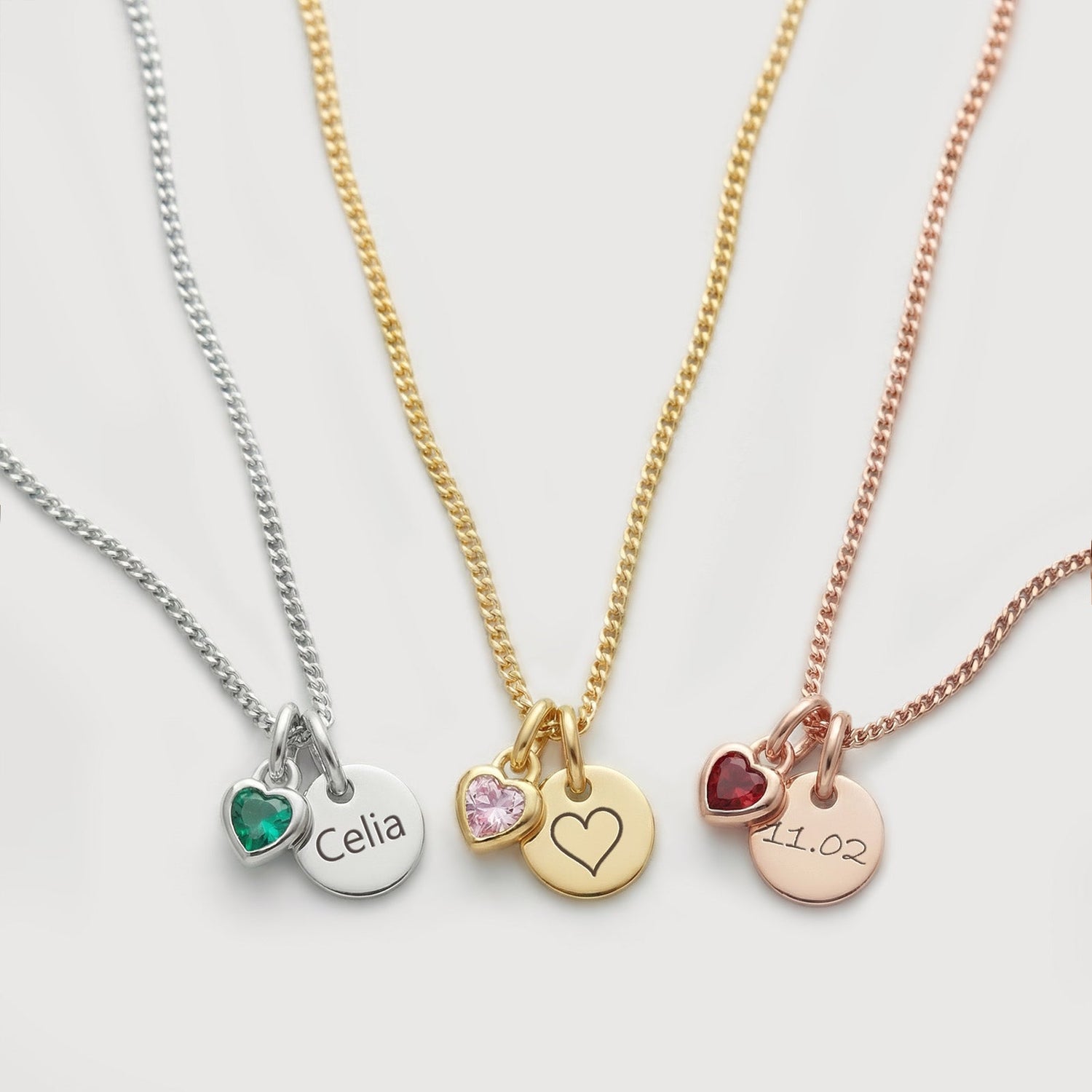
January: garnet, February: amethyst, March: aquamarine, April: diamond, May: emerald, June: light amethyst, July: ruby, August: peridot, September: sapphire, October: rose quartz, November: citrine, December: blue topaz. That's our list. For June, October and December, it deliberately departs from the international standard list, because the stones usually listed there are too delicate for everyday jewellery. We explain exactly why further down.
These three pieces are the ones most often chosen with a birthstone:
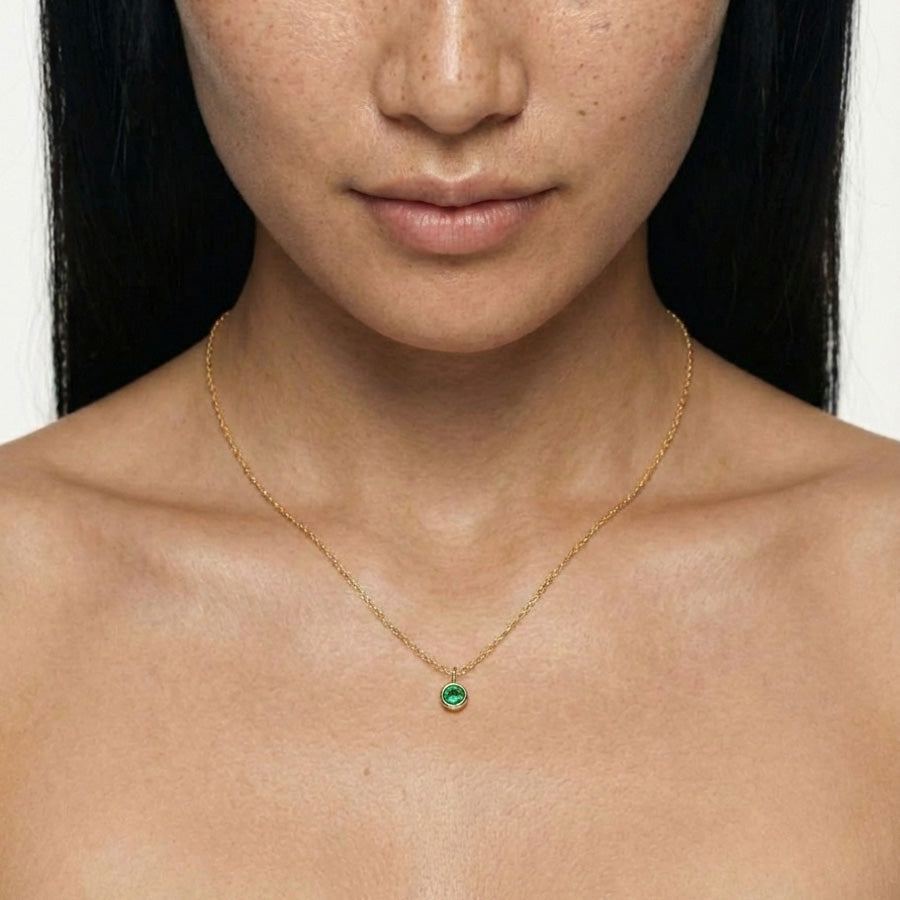
 Heart birthstone necklace
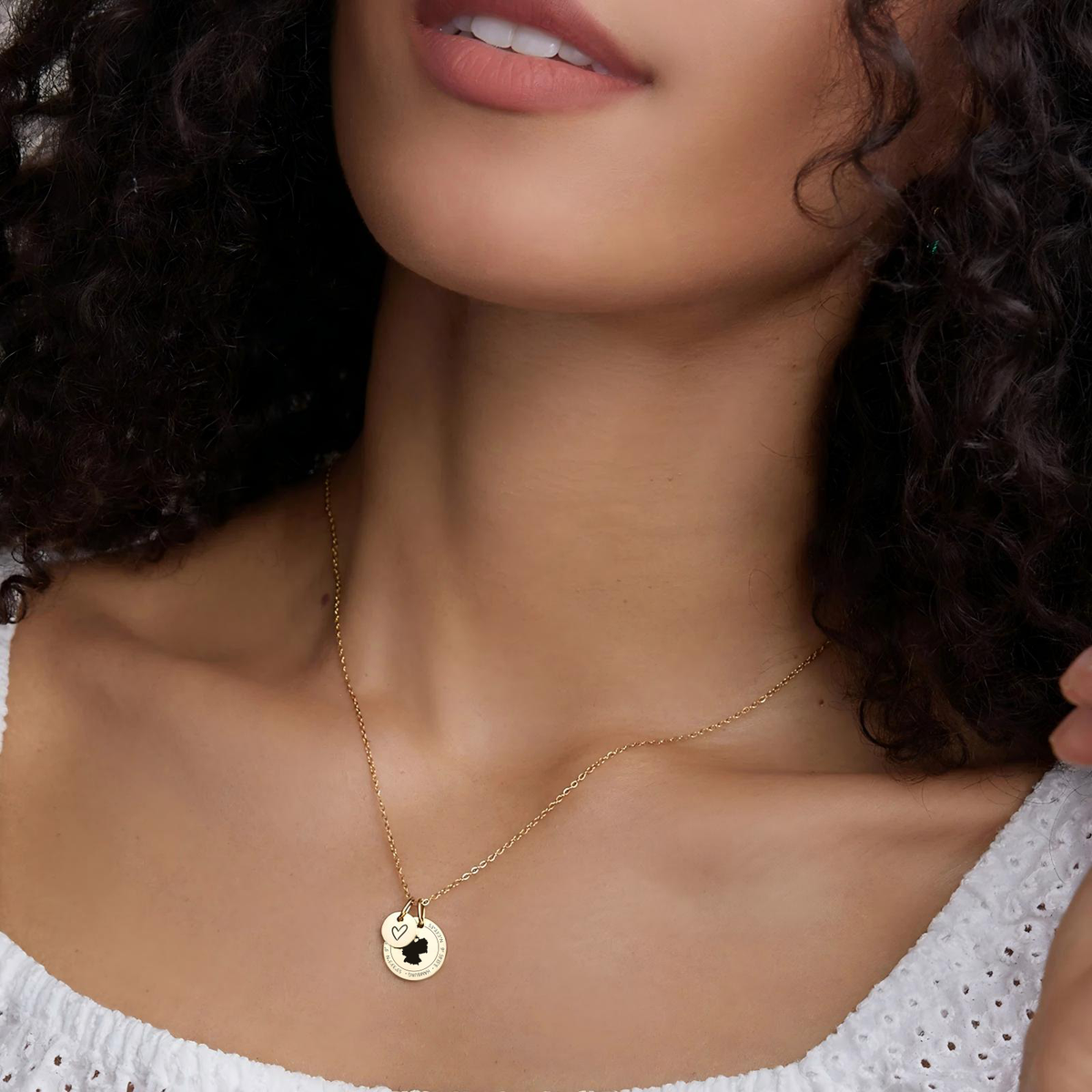
 Necklace with several stones
 Flower and stone together
The twelve birthstones at a glance
Stone and birth flower for each month
-
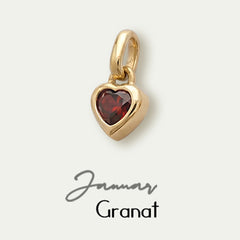 JanuaryGarnet
-
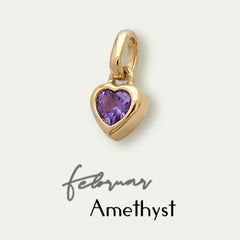 FebruaryAmethyst
-
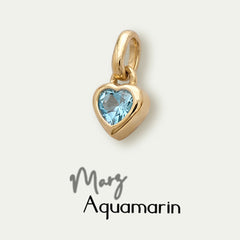 MarchAquamarine
-
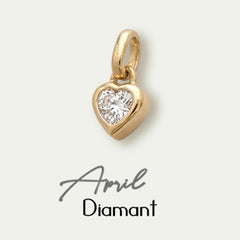 AprilDiamond
-
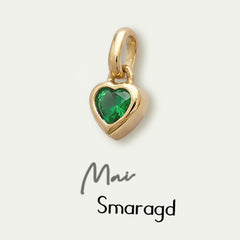 MayEmerald
-
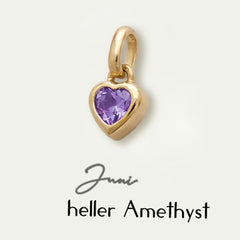 JuneLight amethyst
-
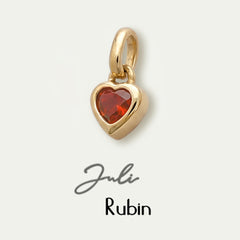 JulyRuby
-
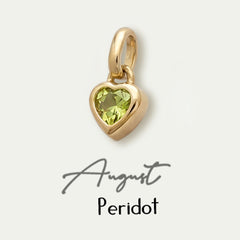 AugustPeridot
-
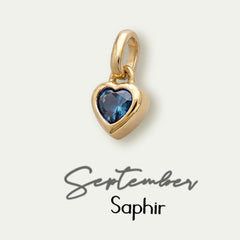 SeptemberSapphire
-
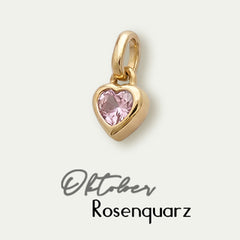 OctoberRose quartz
-
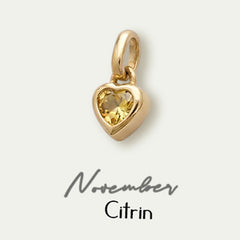 NovemberCitrine
-
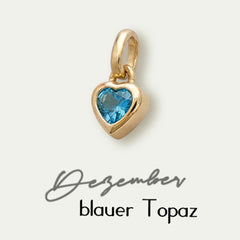 DecemberBlue topaz
What the stones mean
| January | Garnet: loyalty, friendship, enduring love |
|---|---|
| February | Amethyst: clarity, calm, inner strength |
| March | Aquamarine: courage, freshness, wide horizons |
| April | Diamond: clarity, strength, an enduring bond |
| May | Emerald: renewal, love, growth |
| June | Light amethyst: calm, clarity, an open outlook |
| July | Ruby: passion, courage, protection |
| August | Peridot: happiness, strength, optimism |
| September | Sapphire: wisdom, dignity, loyalty |
| October | Rose quartz: love, affection, a sense of security |
| November | Citrine: joy, success, warmth |
| December | Blue topaz: clarity, truth, self-confidence |
For contextThe meanings listed are traditional symbolism. They describe what a stone stands for and are not promises of any effect.
Where birthstones come from
The idea of assigning a stone to each month is an old one. But it only took on its modern form in 1912: that year, the National Association of Jewelers in the USA, now Jewelers of America, established a standardised list. The aim was a uniform assignment of stones for jewellery manufacturing. The selection did not follow old tradition alone; availability and marketing also played a part.
Today, most people wear their stone all year round, and many deliberately choose the stone of a different month because it stands for a particular person: their child, their mother, their partner.
Where our selection differs
Three months, openly stated
June: internationally, usually pearl, moonstone or alexandrite. Ours is a light amethyst, the same delicate violet as in February, only noticeably paler.
October: internationally, opal or tourmaline. Ours is rose quartz. Genuine opal, with a hardness of 5.5 to 6.5, is soft and sensitive to heat and chemicals, so it is not ideal for everyday jewellery.
December: internationally, turquoise or tanzanite. Ours is blue topaz. Genuine turquoise is porous and darkens over the years with exposure to creams and sunlight.
And one clarification about April: its birthstone is traditionally called diamond. As with all the other stones, we create it in colourless cubic zirconia, so it is not a diamond in the gemstone sense but the April colour.
Why we work with cubic zirconia
We create the twelve birthstone colours in sparkling cubic zirconia rather than natural stones. There are three reasons for this: cubic zirconia is considerably harder and therefore suitable for everyday wear, the colours remain lightfast over the years, and the jewellery stays affordable. Where we use genuine natural stones, for example in our gemstone bracelets, this is stated explicitly on the product page.
The birth flowers
Besides the stone, each month also has a flower. It is less well known than the stone, which is exactly why it makes a lovely detail when you want to make a gift more personal. All twelve are listed in the birth flower guide, and with the oval disc necklace, stone and flower can be combined on one piece.
More pieces with a birthstone
A birthstone looks its best paired with an engraving: the stone stands for the when, the engraving for the who. With each of these pieces, you choose the month yourself.
-
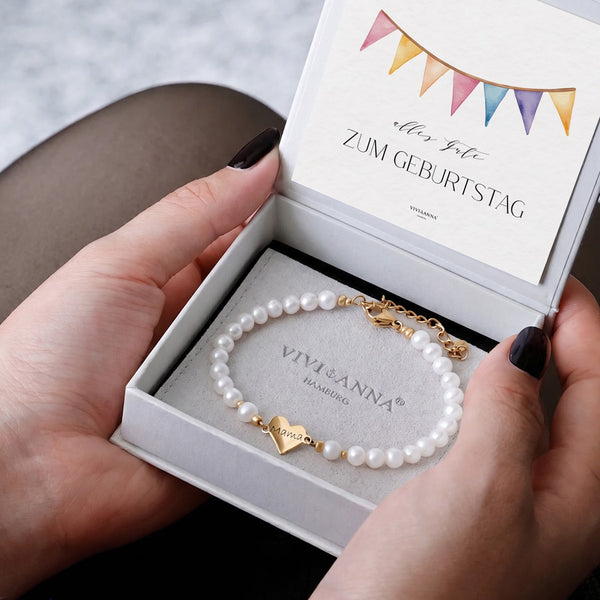
 Angel bracelet with birthstone
-
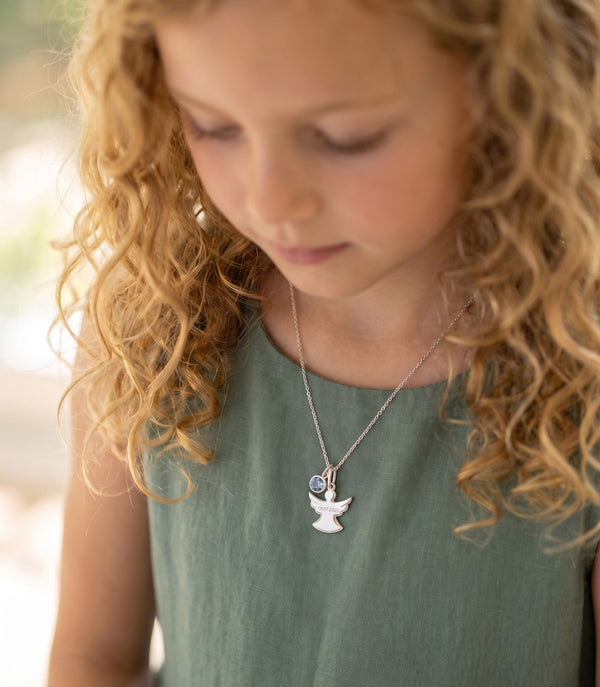
 Guardian angel necklace
-
 925 birthstone bracelet
-
 Additional birthstone charm
View all birthstone jewellery →
So which month do you choose?
This is the question that makes most people pause for a moment. The answer is simple: the stone depends on the person being thought of, not on the person wearing it.
- A gift for Mum. The children's months, one stone per child.
- A gift for Grandma. The grandchildren's months, and more can be added later.
- A gift for your partner. Either her own month or yours, depending on whether the piece is meant to be about her or about the two of you.
- For yourself. Your own month, or the month of someone you want to keep close.
Each month in detail
We have written detailed articles on individual months, covering origins, colours, star signs and matching pieces:
The remaining months will follow gradually, with November, December and January next.
Frequently asked questions about birthstones
Which birthstone belongs to which month?
January: garnet, February: amethyst, March: aquamarine, April: diamond, May: emerald, June: light amethyst, July: ruby, August: peridot, September: sapphire, October: rose quartz, November: citrine, December: blue topaz.
Are these real gemstones?
Our birthstones are cubic zirconia in the colour of the respective month's stone, which makes them harder, more lightfast and better suited to everyday wear than many natural stones. Where we use genuine natural stones, this is stated explicitly on the product page.
Why does your list differ for June, October and December?
Because the stones commonly used for these months internationally, namely pearl, opal and turquoise, are delicate and cannot be reproduced cleanly in cubic zirconia. Instead, we have chosen colours from the same colour family that hold up to everyday wear.
Which month should I choose for a gift?
The month of the person being thought of, not the wearer's. So for a gift for Mum, it's the children's months, and for a gift for Grandma, the grandchildren's.
Can I combine several birthstones?
Yes, that's the most common request, for example one stone per child. For this, there's the additional birthstone charm, the most affordable item in our range. It can still be added even years after purchase.
Which birth flower belongs to which month?
January: carnation, February: violet, March: daffodil, April: daisy, May: lily of the valley, June: rose, July: larkspur, August: gladiolus, September: aster, October: marigold, November: chrysanthemum, December: holly.
Can I have the jewellery engraved?
Yes, on almost all pieces. The most common engravings are a name, a date of birth or a small symbol. Allow 3 working days for processing, plus delivery time.
All the year's flowers are in the birth flower guide, genuine natural stones in the gemstone guide. You'll find gifts sorted by recipient in the gift guide. Everything is made and engraved by us in Hamburg.

Leave a comment
This site is protected by hCaptcha and the hCaptcha Privacy Policy and Terms of Service apply.