

Stainless steel for everyday wear, 925 sterling silver for your skin and for special occasions. That's the short version. Stainless steel is waterproof, doesn't tarnish and stands up to sport, showers and children's hands. 925 sterling silver is the more precious metal, is best tolerated by sensitive skin and is the classic gift for a christening or Communion. We offer both in silver-coloured and gold-plated versions, and both can be engraved. The difference lies in weight, care and price, not in quality.
This page answers the questions we're asked most often about materials: Will it turn black? Can I wear it in the shower? Will my skin tolerate it? And why does one cost more than the other?
The two materials compared
| Stainless steel | 925 sterling silver | |
|---|---|---|
| What it is | A skin-friendly steel alloy, the kind also used for watch cases | 92.5% pure silver, 7.5% copper for strength, rhodium-plated on our pieces |
| Weight | Light, noticeably sturdy | Heavier, feels more valuable |
| Water | Waterproof, including sea water and chlorine | Water is no problem; chlorine and salt water are best avoided |
| Tarnishing | Virtually never | The rhodium plating protects against it; possible over the years with heavy sweating and perfume |
| Skin | Skin-friendly, well tolerated | The classic precious metal, first choice for very sensitive skin |
| Gold | 18-carat gold-plated, lasts for years with daily wear | 18-carat gold-plated on silver, equally durable |
| Engraving | Dark grey, high contrast, very durable | Finer, slightly lighter, elegant on polished silver |
| Price | Usually €25 to €50 | Usually €45 to €90 |
Stainless steel: when the piece stays on
Three quarters of our range is stainless steel, and there's a reason for that: personalised jewellery gets worn, not put away. A sailing rope bracelet with a child's name stays on when swimming, and a family necklace stays on during sport. Stainless steel takes all that in its stride without anything changing, and the engraving stays dark and legible.
The gold colour is a coating of 18-carat gold on the steel. It lasts for years with daily wear. In places with constant friction, such as the inside of a ring or the underside of a bracelet, it eventually wears thinner; that is the case with any gold plating.
Stainless steel is suited to: men's jewellery, children's jewellery, bracelets, anything worn every day and everywhere.
925 sterling silver: when the piece should mean something
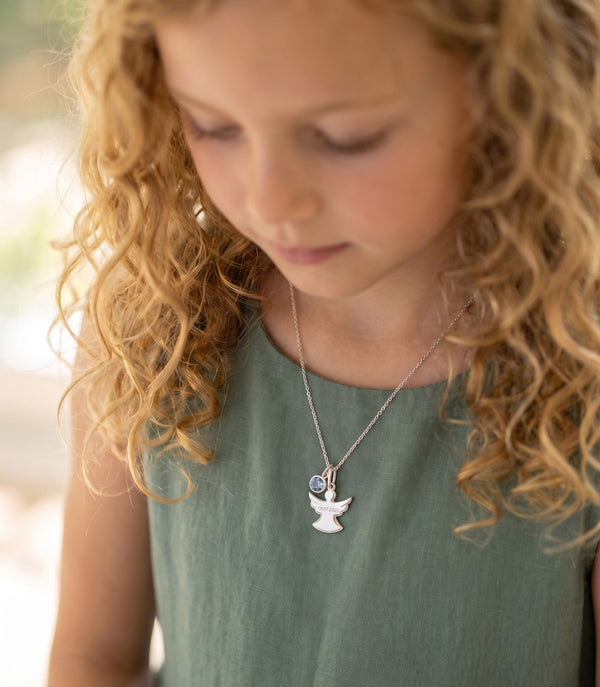
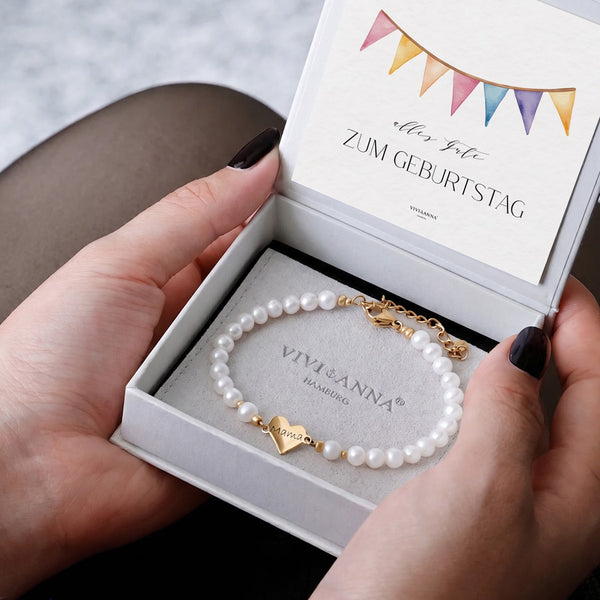
Silver is the metal people have given for christenings, Communions and milestone birthdays for generations. It is heavier, has a softer lustre, and it is a valuable precious metal. Our silver pieces are rhodium-plated, meaning they have a thin layer of rhodium that prevents tarnishing and preserves their shine. On necklaces with real flowers, freshwater pearls or natural stones, the setting is almost always silver, because it can be worked more finely.
Silver is suited to: christenings and Communions, pearl and flower jewellery, people with very sensitive skin, and anyone who values the weight of a piece in the hand.
Three questions that tip the balance
Will it be worn every day and everywhere?
Yes: stainless steel. Especially for children, men and anyone who never takes their jewellery off.
Does the wearer have sensitive skin?
Both are skin-friendly, and all the materials we work with meet the EU requirements for jewellery – including the limits for nickel release, lead and cadmium. Anyone who has ever reacted to fashion jewellery is safest with 925 sterling silver.
Is it an occasion where the metal matters?
Christening, Communion, confirmation, milestone birthday: silver. Starting school, graduation, couples' bracelet, Dad: stainless steel.
Care in brief
Stainless steel: lukewarm water, a soft cloth. That's it. No polishing paste on the engraving.
Silver: wipe it dry after wearing, don't leave it lying in the bathroom, and apply perfume before putting it on. If it ever tarnishes after years, a silver polishing cloth will help; don't rub over the engraving.
Gold-plated, both materials: don't store them in the same box as other jewellery, as that rubs off the coating.
When neither is the right choice
It has to be real gold. Our gold tones come from gold plating. If you want solid gold, we're not the right place for you, and we'd rather tell you that up front.
It should never need any care and still be silver. Rhodium plating helps, but silver is still silver. In that case, silver-coloured stainless steel is the more honest choice.
Pieces in both materials
-
 Family necklace, stainless steel
-
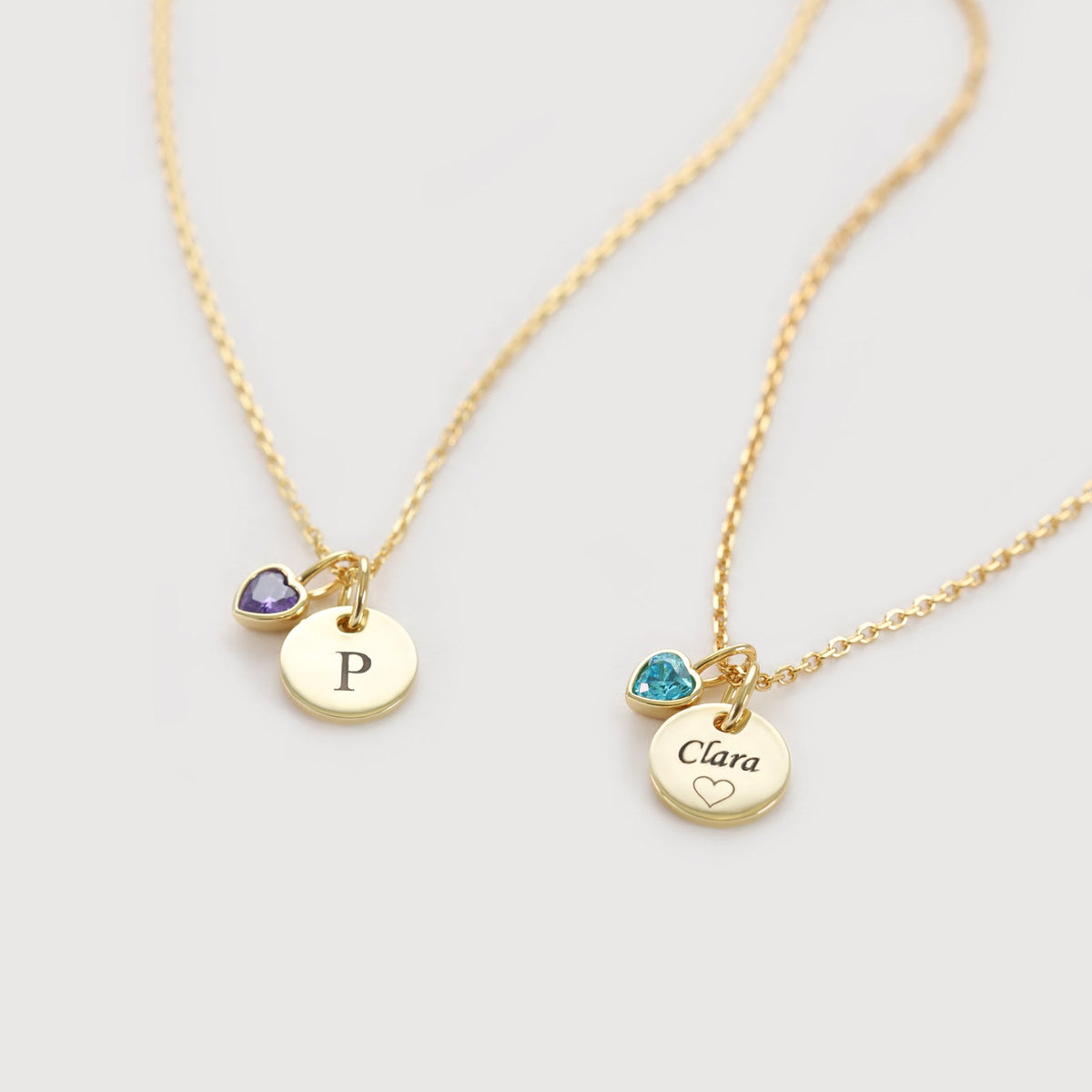
 Disc necklace, 925 sterling silver
-
 Sailing rope bracelet, stainless steel
Frequently asked questions about materials
Does stainless steel jewellery turn black?
No. Stainless steel doesn't tarnish or rust. Showering, swimming and sport don't change it either.
Does 925 sterling silver tarnish?
Our silver pieces are rhodium-plated, which prevents tarnishing in everyday wear. With heavy sweating and perfume, silver can turn dull over the years; a silver polishing cloth brings the shine back.
Is the jewellery skin-friendly?
Yes. Stainless steel and 925 sterling silver are skin-friendly, and all the materials we work with meet the EU requirements for jewellery – including the limits for nickel release, lead and cadmium. For very sensitive skin, 925 sterling silver is the safest choice.
Is it real gold?
The gold-coloured pieces are plated with 18-carat gold, on stainless steel or on 925 sterling silver. We don't carry solid gold.
Can I wear the jewellery in the shower?
With stainless steel, yes, without restriction. With silver too, but you should avoid chlorine and salt water and dry the piece afterwards.
Does the engraving look the same on both materials?
On stainless steel the engraving is dark grey with high contrast; on silver it is finer and slightly lighter. Both are permanent, and the preview in the engraving window shows the piece in question.

Leave a comment
This site is protected by hCaptcha and the hCaptcha Privacy Policy and Terms of Service apply.